




Introduction
Some films invite us into a world of spectacle, while others challenge us to confront the inner labyrinth of the human psyche. The Royal Game, adapted from Stefan Zweig’s novella Chess Story, belongs firmly in the latter category. This is not simply a story about chess, but rather an exploration of obsession, isolation, and the fragile boundaries of the human mind. Set in the 1930s aboard a transatlantic liner, it is a chamber piece disguised as a thriller, taut and suffused with tension.

Plot Overview
At the heart of the film is Dr. B, a man whose very survival depends on his mind’s ability to endure. Imprisoned in isolation and stripped of human contact, he stumbles upon a chess manual—an unlikely lifeline that becomes both his salvation and his curse. When he finds himself playing a high-stakes match against a formidable opponent on the ship, the boundary between strategy and madness blurs. The game transcends the board; it becomes a battle for his very sanity.

Performances and Direction
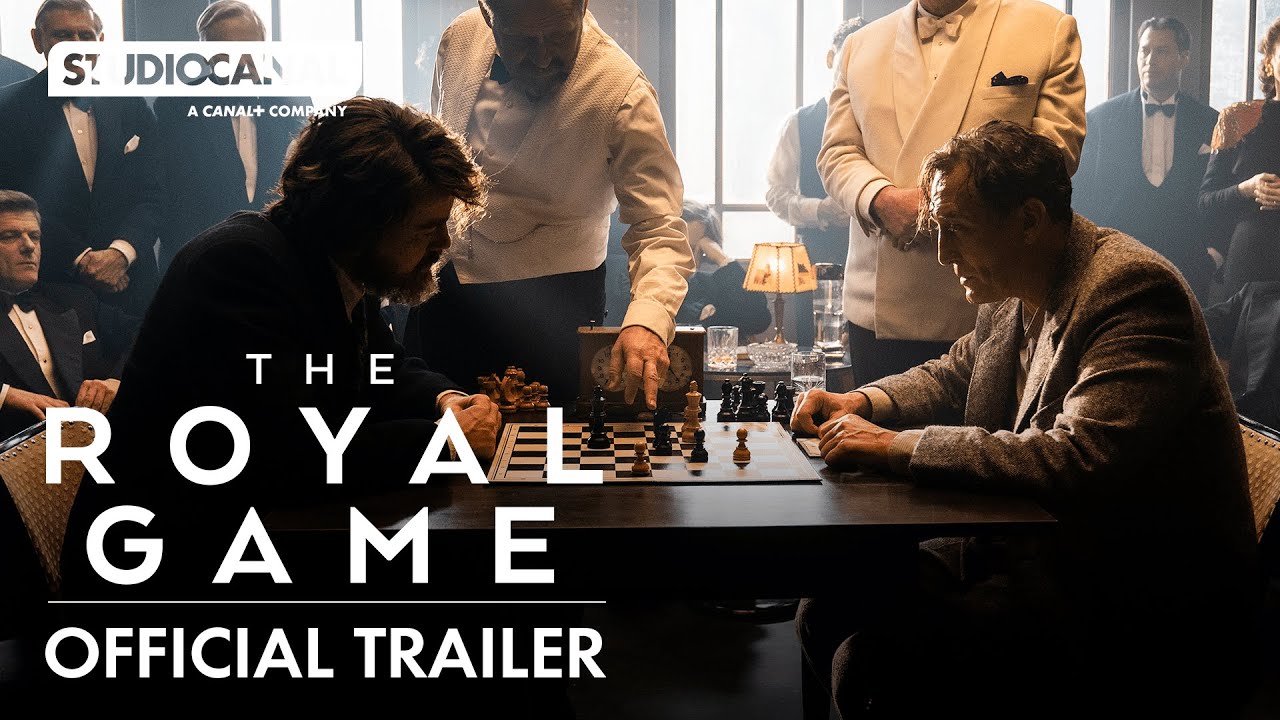
The success of a psychological drama rests on the strength of its performances, and here the cast delivers with remarkable precision. The actor portraying Dr. B navigates the delicate shifts between composure and breakdown with haunting realism. His opponent, enigmatic and quietly menacing, exudes a presence that lingers even when silent. The direction mirrors Zweig’s prose—measured, deliberate, and unrelenting in its focus on detail. Close-up shots of the chessboard echo the claustrophobia of confinement, while wide shots of the ocean liner emphasize the paradox of being trapped amidst freedom.

Themes and Symbolism
- Isolation: Dr. B’s solitude is a crucible, transforming him in ways both profound and destructive.
- Obsession: Chess becomes more than a game; it is a mirror reflecting the extremes of human endurance.
- The Mind as a Battlefield: The real stakes lie not in victory or defeat but in the preservation of identity against mental disintegration.
Cinematography and Atmosphere
The film’s visual style enhances its psychological weight. Shadows dominate the frame, hinting at the unseen struggles within. The ocean liner setting amplifies the sense of entrapment—luxury on the surface, suffocation beneath. A muted color palette grounds the story in its historical period while emphasizing its timeless themes of human fragility.
Why This Film Matters
The Royal Game is more than an adaptation; it is an invitation to reflect on how isolation reshapes our humanity. In an age where solitude can be both a balm and a torment, the film resonates with unsettling relevance. It is not merely for chess enthusiasts but for anyone fascinated by the architecture of the mind under duress.
Conclusion
Intense, cerebral, and deeply moving, The Royal Game reminds us that the fiercest battles are often fought within. It is a film that rewards patience and contemplation, leaving audiences with questions that linger long after the credits roll. For those seeking a cinematic experience that challenges as much as it entertains, this is a masterful psychological drama worth watching.